


FAM Dispenser
FAM Dispenser
Couldn't load pickup availability
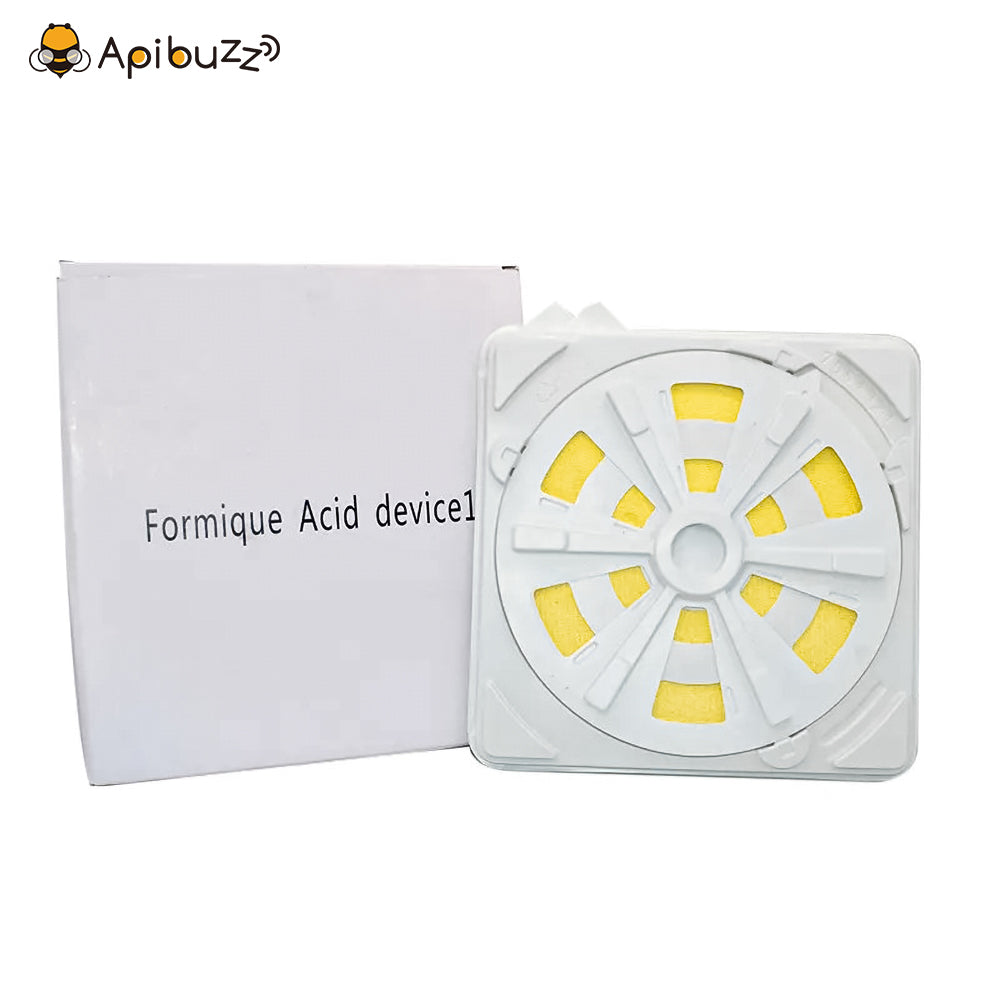
Remove the lid, add the formic acid to the sponge cloth and close the lid. Once at the apiary adjust the opening of the disc in function of temperature and hive size. Place the dispenser upside down directly over the brood area. Best results are achieved with 2–3 cm space between the dispenser and the top bars of the frames. Adjust opening of the disc after day 2 following the instructions.
Treatment profile
Formic acid vapours act fast on Varroa. Varroa mite fall peaks on the second and third day. The use of formic acid may cause brood interruption. Vapours may cause some fatal damage to brood and emerging bees. Occasional Queen loss has been observed with shock treatment and at elevated temperatures. Formic acid acts only while vapours are generated and present. After the treatment vapours are removed by ventilating bees and the action stops. Since formic acid is soluble in water it will be found as residue in honey and nectar present during treatment also in capped honey cells. Feeding during treatment may lead to robbery.
Safety
Use safety goggles and protective clothing when working with formic acid
Introduction
Discover a simple and effective solution for your apiary with our Formic and Acetic Acid Dispenser. As September marks a pivotal phase in the battle against Varroa, when hives are prepared for wintering and the last honey of the year is harvested, it's the opportune time to address Varroa destructor and safeguard your comb frames from the Wax Moth. Our 130 ml acid dispenser is a valuable tool in these critical tasks.
Formic Acid – Effective Varroa Combat
In the pursuit of alternatives to expensive pharmaceuticals, beekeepers are turning to cost-effective and proven solutions. Formic acid, a well-known organic compound, has demonstrated its efficacy in apiaries for years. What sets it apart is its ability to combat Varroa destructor not only on the bees but also within sealed comb cells, crucially impacting the pests' shortened reproductive phase. A correctly administered 85% formic acid treatment is both safe for bees and highly effective in reducing varroasis.
Acetic Acid – Preserving Honeycombs in Storage
Every year, beekeepers face the challenge of preserving withdrawn frames in storage for future use. These frames are a valuable resource, enabling faster honey collection by bees, particularly in the early stages of the season. However, the threat of the Wax Moth looms over these frames in storage. To protect them, acetic acid comes to the rescue. Its presence in the air disrupts pest activity, halting the destructive tendencies of Wax Moth larvae. Prior to returning the frames to the hive, aeration is essential to dissipate the acetic acid smell, ensuring bees readily accept the frames for use.
Equip your apiary with the Formic and Acetic Acid Dispenser to navigate these critical aspects of beekeeping with ease and effectiveness.


Product Series

Organic Varroa Treatment
Organic varroa treatments are essential for beekeepers who value proper bee care. These treatments can take the form of strips, powders, or solutions containing ingredients like thymol, formic acid, oxalic acid, and other refined substances.

Varroa Mite Strips
Beekeeping Made Easy with Varroa Strips - Say Goodbye to Bee Mites! Buzz your way to beekeeping success with Varroa Strips - kick those pesky bee mites to the curb!

Tools for Varroa Treatment
Employ tools for the administration of varroa medicines or the monitoring of varroa mites. Don't let varroa mites bug you - our monitoring tools have got you covered!